
| (a) | Explain the role of anti-colonial movement in the rise of 'modern nationalism' in India. |
| OR | |
| (b) | Why did Gandhiji say 'Satyagraha is pure soul-force'? Explain by giving two arguments. |
[2 marks]
"Tribal peasants interpreted the message of Mahatma Gandhi and the idea of 'Swaraj' in yet another way." Explain the statement in the context of Non-Cooperation Movement.
[3 marks]
SECTION-A
(Multiple Choice Questions)
Which one of the following pairs regarding Indian nationalism is correctly matched ?
| Leaders | Contribution |
|---|---|
| (a) Sardar Patel | Hindustan Socialist Republican Army |
| (b) Bhagat Singh | Swaraj Party |
| (c) C.R. Das | Bardoli Satyagraha |
| (d) Jawahar Lal Nehru | Oudh Kisan Sabha |
[1 marks]
SECTION-C
(Short Answer Type Questions)
(A) Describe any three causes that led to the Non-Cooperation Movement.
OR
(B) Describe any three causes of 'Civil Disobedience Movement.'
[3 marks]
(a) Analyse the implications of First World War on the economic and Political situation of India.
OR
(b) Analyse the role of folklore and symbols in the revival of nationalism in India during late 19th century.
[5 marks]
| (a) |
Two places (A) and (B) have been marked on the given outline political Map of India. Identify them with the help of given information and write their correct names on the lines drawn near them: (A) The place where the session of INC was held in September, 1920. (B) The place where Mahatma Gandhi broke Salt Law. |
| (b) |
On the same outline Map of India, locate and label any THREE of the following with suitable symbols:
|
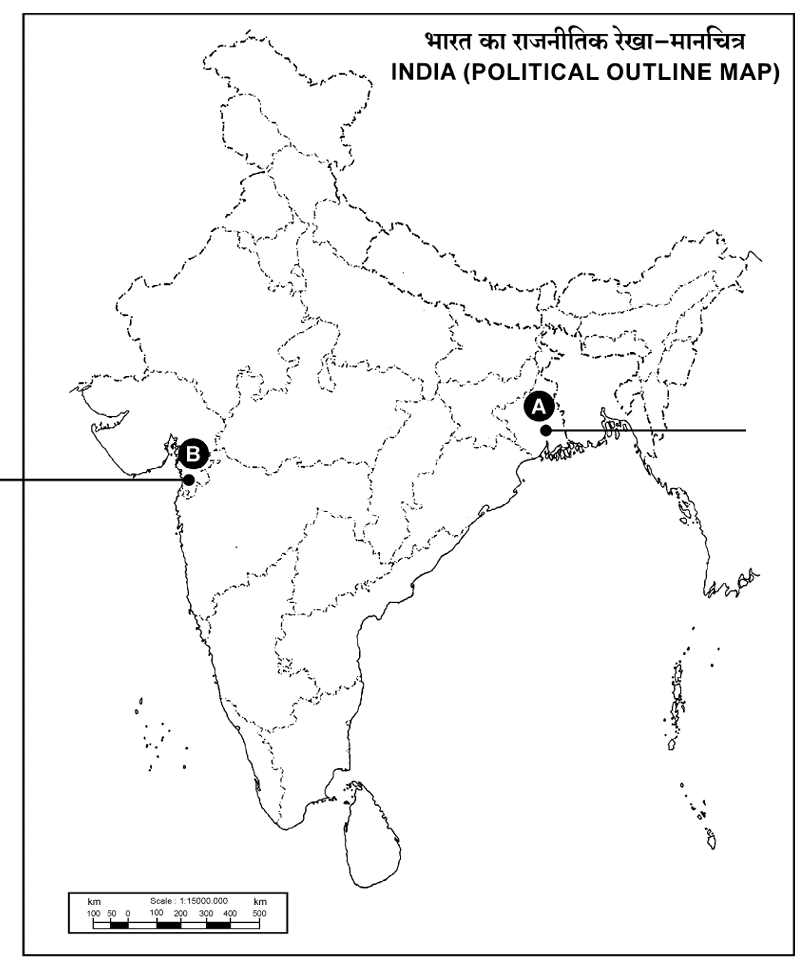
Note : The following questions are for Visually Impaired Candidates only in Lieu of Q. No. 37.
(5 x 1 = 5)
Attempt any five questions:
(37.1) Name the place where the session of INC was held in September, 1920.
(37.2) Name the state where Gandhiji broke Salt Law.
(37.3) Name the place where Salal Dam is located.
(37.4) Name the state where Tarapur Nuclear Plant is located.
(37.5) Name the state where Pune Software Technology park is located.
(37.6) Name the state where 'Paradip' Sea Port is located.
[5 marks]
Why did Indian merchants and industrialists support the Civil Disobedience Movement? Explain.
[2 marks]
"It was essential to preserve folk tradition in order to discover one's national identity and restore a sense of pride in one's past." Support the statement in reference to India.
[3 marks]
Read the case given below carefully and answer the questions that follow:
The Independence Day Pledge, 26 January, 1930
'We believe that it is the inalienable right of the Indian people, as of any other people, to have freedom and to enjoy the fruits of their toil and have the necessities of life, so that they may have full opportunities of growth. We believe also that if any government deprives a people of these rights and oppresses them, the people have a further right to alter it or to abolish it. The British Government in India has not only deprived the Indian people of their freedom but has based itself on the exploitation of the masses, and has ruined India economically, politically, culturally, and spiritually. We believe, therefore, that India must sever the British connection and attain Purna Swaraj or Complete Independence.'
(11.1) Why was freedom considered an inalienable right of the Indian people?
(11.2) Why was Purna Swaraj considered essential by the people of India?
(11.3) Explain the significance of the Lahore Session of Congress (1930).
[4 marks]
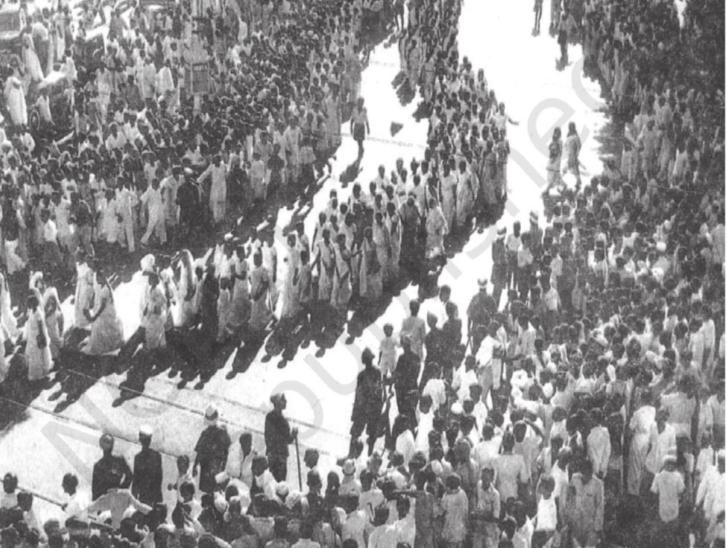
Look at the given historical photograph and identify the mass movement during India's freedom struggle characterised by the popular slogan 'Do or Die' (Karo ya Maro) given by Mahatma Gandhi in August 1942 :
Read the statements given below regarding the Simon Commission and choose the correct option :
Statement (I): The Simon Commission was constituted under Sir John Simon to review the functioning of the constitutional system in India and suggest changes.
Statement (II): The commission was greeted with the slogan 'Go Back Simon' because it did not have a single Indian member.
(A) "The effects of the Non-Cooperation Movement on the economic front were dramatic." Support this statement with five arguments.
OR
(B) Explain the role and participation of Indian merchants and industrialists in the Civil Disobedience Movement.
[5 marks]
MAP SKILL-BASED QUESTION (HISTORY)
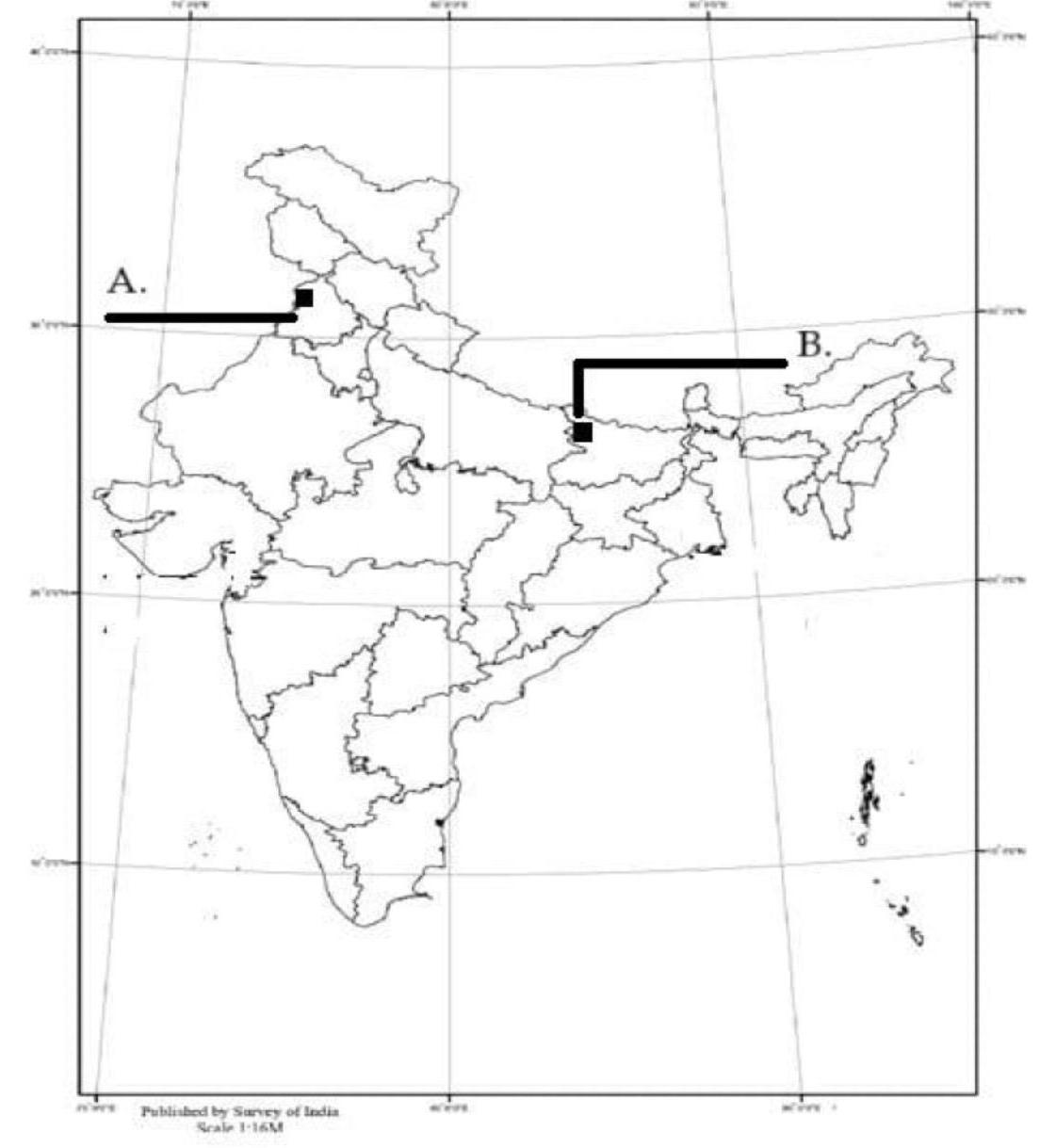
On the outline political map of India given below, identify and locate the following historical centres of the Indian National Movement :
(a) The place where Mahatma Gandhi broke the salt law, inaugurating the Civil Disobedience Movement.
(b) The place where the tragic Jallianwala Bagh incident took place in 1919.
[2 marks]