

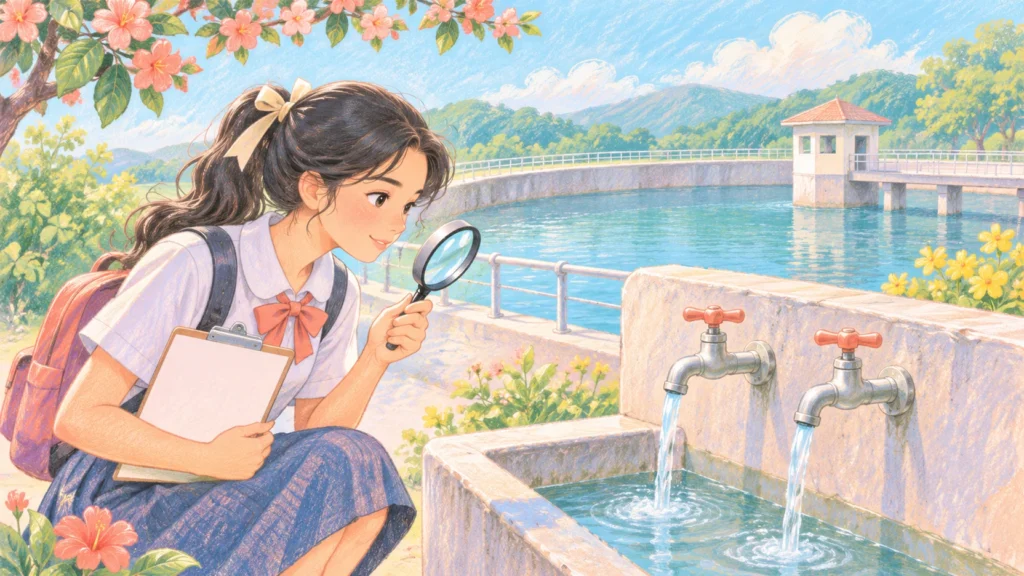
A region receives rain, yet some residents struggle to obtain usable water. At first that may seem contradictory. The difficulty becomes clearer when we separate how much water exists from when it is available, who can access it and whether its quality makes it suitable for use.
Water scarcity is therefore not explained by rainfall alone. Class 10 Geography asks you to consider demand, distribution and pollution as well as natural supply. The Water Resources notes provide the chapter context; this guide uses original situations to build a more complete explanation.
Supply varies across time and place
Water is not evenly available everywhere or in every season. A place may receive much of its rainfall during a limited period and face a drier season later. Storage, recharge and the timing of demand affect how that supply supports people.
Do not treat an annual rainfall total as a complete description of everyday access. Two places with similar totals may differ in the timing of rain, local conditions and the infrastructure available to manage it.
In a case question, notice whether the problem is seasonal, regional or connected to a particular source. That determines which part of the explanation needs emphasis.
Demand can put pressure on available water
Households, agriculture and industry use water for different purposes. Population changes, expanding production and shifts in patterns of use can increase pressure on a supply.
Imagine a fictional town where the same source must now serve more homes and several new activities. Even without a fall in rainfall, demand may grow faster than the arrangements for supply.
A clear answer connects the increase in use to the existing source and its limits. “Population causes scarcity” is too general unless you explain that more users and activities increase demand under the stated conditions.
Access is different from physical presence
Water may exist in a reservoir or underground while some people cannot obtain it reliably. Infrastructure, distance, distribution and unequal access can influence who benefits from the available supply.
For example, a fictional settlement may have a nearby source but an unreliable distribution network. Households at one end receive regular supply while those farther away face interruptions. The problem is not fully described by saying the source exists.
In an explanation, distinguish availability from access. This helps you avoid the mistaken conclusion that no scarcity can exist wherever water can be seen on a map.
Quality changes usable supply
Pollution can make water unsuitable for particular uses. A large quantity of contaminated water does not provide the same benefit as a reliable supply of water of suitable quality.
Suppose a fictional river passes through a town, but waste entering it reduces its usefulness. Residents may still face a shortage of usable water despite the river’s presence. The example illustrates a quality problem rather than proving that every river has the same condition.
Do not suggest drinking untreated water or performing risky tests to demonstrate this concept. For a written answer, explain the relationship between pollution and usable supply without turning the example into an experiment.
Original case: three neighbourhoods
Imagine a fictional town with three different difficulties. In A, summer supply falls after a dry period. In B, water exists but broken distribution pipes interrupt access. In C, a source is affected by pollution.
All three neighbourhoods may experience water scarcity, but their immediate causes differ. A response focused only on increasing storage would not automatically repair B’s distribution problem or address C’s pollution.
This is why a good case answer identifies the cause before proposing a measure. Multiple problems may occur together, so the response may need more than one kind of action.
Conservation includes careful management
Conservation can involve reducing waste, protecting sources, improving efficiency and managing demand. It is broader than simply telling households to close a tap.
Household habits matter, but major uses and shared systems also influence the overall situation. A balanced explanation considers the scale of the problem and the users involved.
If the case describes leaking distribution, explain how reducing losses helps. If it describes inefficient use in an activity, connect efficiency to that activity. Avoid offering the same small habit as the complete solution to every regional water problem.
Rainwater harvesting depends on context
Rainwater harvesting collects and stores rainfall or supports recharge through suitable arrangements. It can help use rainfall more effectively, but its design and usefulness depend on local conditions.
In a Class 10 answer, explain the principle and connect it to the case. Do not claim that one simple device will solve every shortage regardless of rainfall, demand or maintenance.
Similarly, a large project may provide benefits while creating environmental and social concerns. The textbook discusses competing views, so an answer should recognise both the stated purpose and the relevant effects rather than presenting every project as automatically beneficial or harmful.
Write a layered explanation
A useful structure begins with the specific evidence. State whether supply is limited, demand has increased, access is unequal or quality has deteriorated. Then explain how that feature reduces reliable usable water for the people in the case.
If the question asks for measures, match each measure to a cause. Source protection addresses a different part of the problem from distribution repair or changes in demand. This matching makes the answer practical without pretending to offer a complete technical plan.
Avoid vague sentences such as “water is scarce because there is no water”. The explanation should add information about the process creating the shortage.
Try a short reasoning question
A fictional district has moderate rainfall, but demand has grown and one source is polluted. Why would rainfall alone be an inadequate explanation of its water situation?
The answer should identify both increased use and reduced usable supply. Rainfall describes one input, while the district’s experience depends on how much is required, how sources are managed and whether the water can be used.
Read the NCERT Water Resources chapter, then attempt the Water Resources practice questions. Check that you have explained at least one link between a cause and an outcome, rather than simply listing demand, pollution and access as unrelated words.












Comments (0)
No comments yet. Be the first to comment!
Please log in to comment
Log In