Class 10 English Board Express: First Flight Prose, Poetry Analysis & Core Grammar Rules | Dear Sir
Course Content



Mastering CBSE Class 10 English: Complete Literature, Writing Skills & Grammar Mastery
English Language and Literature (CBSE Subject Code 184) in Class 10 serves as the primary medium of modern academic expression, critical textual interpretation, and refined professional communication. Beyond basic linguistic fluency, succeeding in the board examination requires a sophisticated command of literary analysis, structural grammar conventions, and creative writing formats. Developed in partnership with India’s foremost English language educational platform, Dear Sir, this masterclass batch delivers a complete, chapter-by-chapter literary breakdown, character psychological analyses, grammatical shortcut rules, and formal writing templates tailored specifically for the 2026-27 CBSE Board Examination.
Curriculum Blueprint and Sectional Distribution
The CBSE Class 10 English Language and Literature examination consists of an 80-mark written theory paper and 20 marks in school-based Assessment of Speaking and Listening (ASL). The theory paper is strictly structured across three distinct operational sections:
- Section A: Reading Skills (20 Marks): Features two unseen passages carrying 10 marks each:
- Discursive Passage (400–450 words): Assessing inferential reading, vocabulary in context, and authorial perspective through multiple-choice and short-answer questions.
- Case-Based Factual Passage (200–250 words): Testing analytical interpretation of accompanying visual data, statistical charts, comparative bar graphs, and survey summaries.
- Section B: Writing Skills and Grammar (20 Marks): Divided equally into practical grammar and creative writing composition:
- Applied English Grammar (10 Marks): Testing 10 out of 12 questions across Tenses, Modals, Subject-Verb Concord, Reported Speech (Commands and Requests, Statements, Questions), and Determiners via gap-filling, sentence transformation, and dialogue completion exercises.
- Creative Writing Skills (10 Marks): Comprising two 5-mark writing tasks: a Formal Letter based on a given situation (Letter to the Editor, Complaint Letter, Order Placement, or Inquiry Letter in 100–120 words) and an Analytical Paragraph deconstructing given charts, cues, or outlines.
- Section C: Language through Literature (40 Marks): Contributing half the entire paper weightage, based on the prescribed textbooks First Flight (Prose and Poetry) and Footprints Without Feet (Supplementary Reader). Assessment includes reference-to-context (RTC) extracts from prose and drama (5 marks), poetry extracts (5 marks), short answer questions (12 marks), and two thematic 6-mark long analytical essays evaluating character motives and moral themes.
The Dear Sir Pedagogical Method: Making English Effortless
Many students view English literature as subjective and unpredictable. The Dear Sir teaching philosophy transforms literature and grammar into structured, rule-based systems:
- Eliminating Grammar Rule Overload: Instead of memorizing hundreds of disconnected Latin grammar rules, Dear Sir introduces visual flowchart matrices for Reported Speech and Tense transformations, allowing students to convert direct dialogue into indirect narration accurately in seconds.
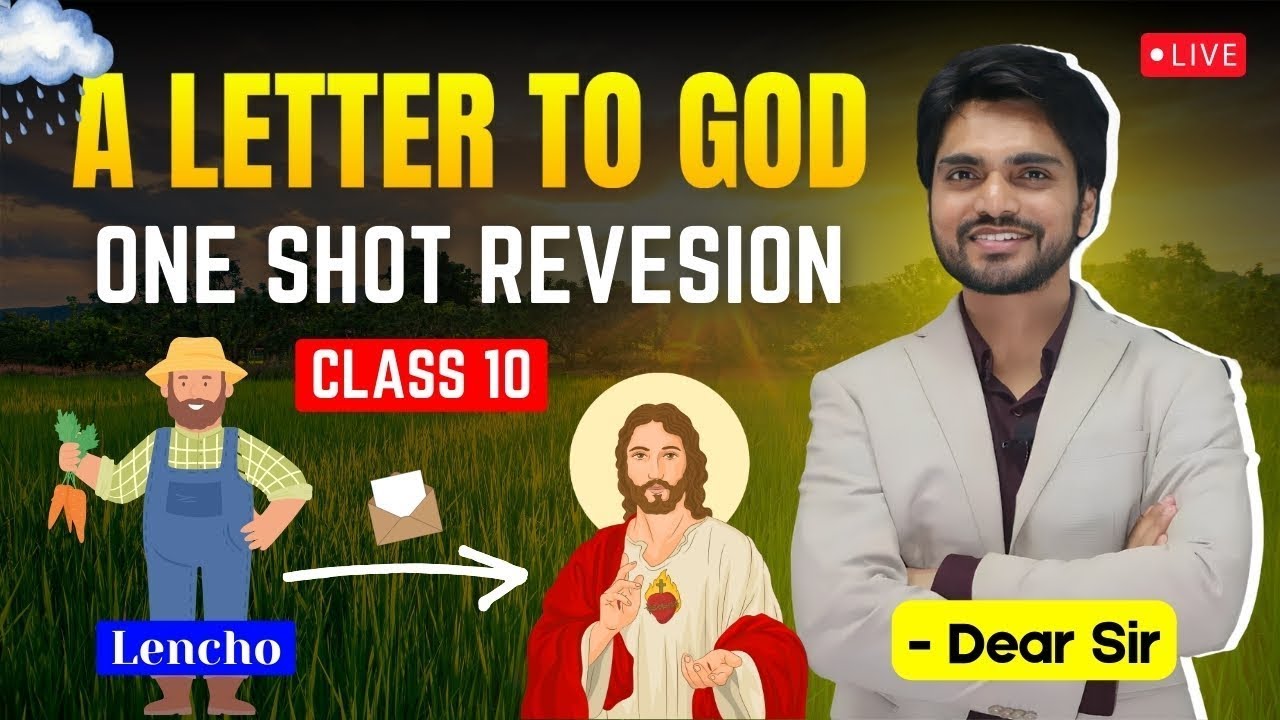
- Theme and Character Psychology: We dissect literary texts not merely as plot summaries, but as deep psychological examinations of human nature—analyzing Lencho’s blind, unshakeable faith in A Letter to God, Nelson Mandela’s profound moral courage during the anti-apartheid struggle, and the subtle situational irony woven into the narratives.
- Examiner Marking Rubrics: In Section B writing tasks, CBSE examiners evaluate students across three specific criteria: Format (1 Mark), Content (2 Marks), and Expression (2 Marks for grammatical accuracy, coherent paragraph transitions, and rich vocabulary). We teach students standard introductory and concluding templates that guarantee maximum expression marks.
Sectional Organization of This Course
| Module Section | Chapters Covered | Core Linguistic Competencies | Board Weightage |
|---|---|---|---|
| First Flight Literature | A Letter to God, Nelson Mandela | Plot comprehension, thematic analysis, character traits, situational irony, RTC questions | 20 Marks |
| Applied English Grammar | Reported Speech (Narration), Tenses | Tense shifts, pronoun conversions, reporting verb modifications, dialogue completion | 10 Marks |
Examiner Recommendations for Scoring Above 95%
To achieve top honors in English Language and Literature, avoid colloquial slang or texting abbreviations in formal writing. Always write answers using a three-part structure: a clear introductory thesis, textual evidence supporting your claim, and a thoughtful concluding synthesis. In grammar, underline your filled-in answers neatly and double-check pronoun gender agreements. When writing letters, ensure your sender and recipient addresses, subject line, and formal sign-offs follow the standard flush-left block format without unneeded commas. Through regular engagement with this Dear Sir masterclass series, you will cultivate the linguistic fluency and analytical depth needed to excel in your Class 10 board examinations.
Mastering Poetic Devices & Literary Analysis
To secure maximum marks in Section C literature analysis, students must master both narrative plot points and underlying poetic craftsmanship. In the poetry syllabus of First Flight (including Frost’s Dust of Snow and Fire and Ice, Norris’s A Tiger in the Zoo, and Whitman’s Animals), questions regularly assess figurative language:
- Alliteration & Assonance: The repetition of consonant sounds at the beginning of adjacent words (e.g., “saved some part”) versus the repetition of vowel sounds within closely connected words.
- Metaphor & Simile: Comparing two fundamentally disparate concepts explicitly using “like” or “as” (simile) versus implicit, direct substitution without comparative conjunctions (metaphor).
- Personification & Symbolism: Imbuing inanimate natural forces with conscious human agency and using tangible physical objects to signify profound abstract human virtues.
- Enjambment: The continuation of a poetic sentence or thought beyond the end of a line, couplet, or stanza without terminal punctuation.
In this masterclass series, every literary chapter is supplemented with dedicated line-by-line poetic device glossaries and high-scoring answer templates.
Classes & Batches

Class 10 Maths Full Syllabus NCERT Masterclass: Chapter-Wise Concepts, Proofs & Shortcut Tricks | Dear Sir

Class 10 SST Complete NCERT Board Course: Animated History, Civics, Geography & Economics | Digraj Sir

Class 10 Science Full Syllabus Batch 2026-27: Complete NCERT Lectures, Concept Notes & PYQs | PW Foundation
Study Resources & Notes

NCERT Class 10 Hindi Book PDF (Sparsh Part 2)

CBSE Class 10 Hindi PYQs with Solution

CBSE Class 10 Information Technology PYQs with Solution

NCERT Class 10 Economics Book PDF (Understanding Economic Development)
Quick Practice & Sets

CBSE Class 10 Science 30-Minute Rapid Chapter Mocks

CBSE Class 10 Science Chapter-wise Assertion & Reason Bank

CBSE Class 10 Maths Standard Timed Chapter Mocks