
Class 10 Science Full Syllabus Batch 2026-27: Complete NCERT Lectures, Concept Notes & PYQs | PW Foundation
Course Content





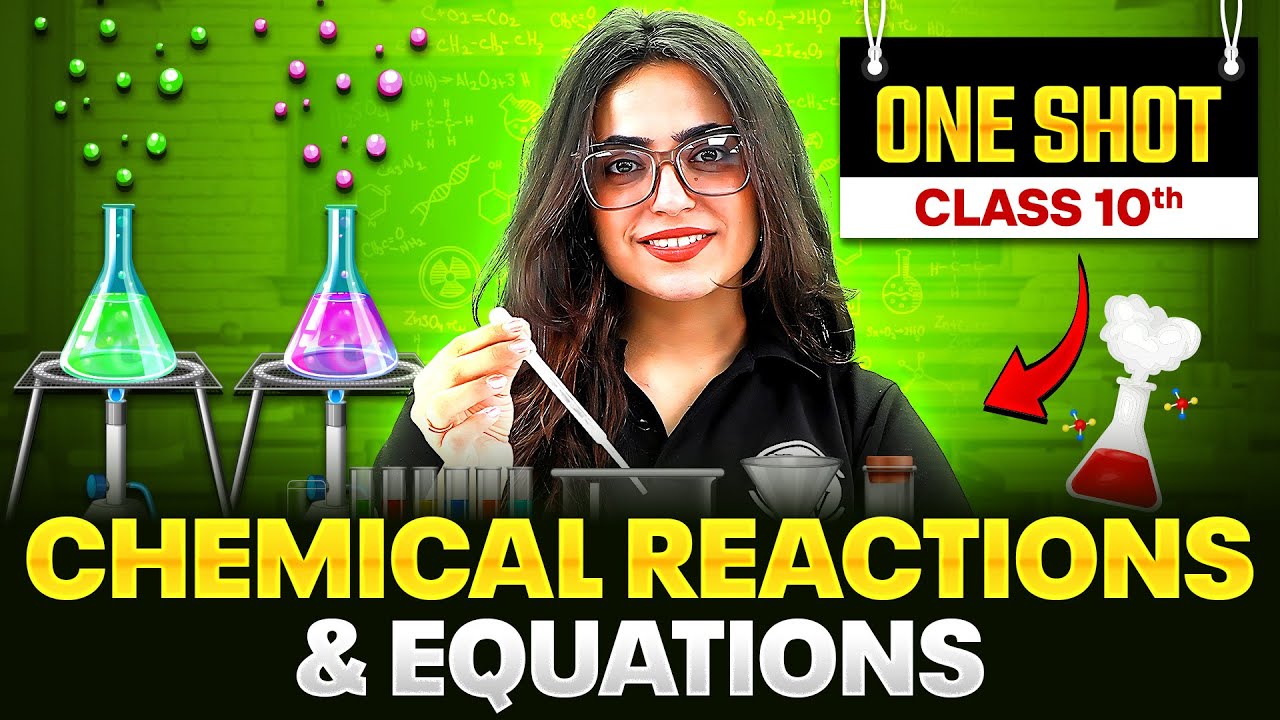
Mastering Class 10 CBSE Science: The Ultimate Comprehensive Syllabus Guide for Board Exams
Class 10 Science serves as the definitive academic bridge between foundational middle-school general science and specialized higher-secondary disciplines such as physics, chemistry, and biology. Preparing thoroughly for the Central Board of Secondary Education (CBSE) Class 10 Science board examinations requires an integrated approach that harmonizes intuitive conceptual clarity, rigorous scientific problem-solving, and a systematic memorization of reaction mechanisms, biological systems, and circuit formulas. This dedicated masterclass batch, developed in direct collaboration with leading educators from the prestigious Physics Wallah Foundation, provides a comprehensive, structured, and line-by-line pedagogical journey across the entire NCERT textbook syllabus tailored specifically for the 2026-27 academic session.
Curriculum Blueprint and Section Breakdown
The revised CBSE Class 10 Science syllabus is broadly divided into four high-weightage thematic domains designed to test both theoretical foundations and analytical reasoning:
- Chemical Substances – Nature and Behaviour (Chemistry): Spanning foundational chapters including Chemical Reactions and Equations, Acids, Bases and Salts, Metals and Non-Metals, and Carbon and Its Compounds. This domain accounts for 25 critical marks in the final board paper, emphasizing balanced stoichiometric equations, precipitation observations, indicator color transitions, and homologous series isomerism.
- World of Living (Biology): Covering complex physiological life processes, control and coordination in organisms, reproduction, and heredity. Students explore molecular transport mechanisms, enzymatic cascades in the human alimentary canal, cellular respiration bioenergetics, double circulation hemodynamics, and nephron filtration dynamics.
- Natural Phenomena and Effects of Current (Physics): Encompassing the laws of reflection and refraction through spherical mirrors and lenses, optical ray diagrams, human eye optical defects, Ohm’s law, resistance combinations, Joule’s heating law, and magnetic field configurations around current-carrying conductors.
- Natural Resources (Environmental Science): Exploring ecological balance, trophic level energy transfer efficiencies obeying the 10 percent law, and biomagnification patterns across biological food webs.
Pedagogical Philosophy and Board Scoring Strategies
Securing a score above 95 percent in Class 10 Science demands significantly more than rote memorization. The CBSE examination architecture has evolved toward high-order thinking skills (HOTS), competency-based questions, source-based case studies, and practical experimental inquiries. In this course, each module is systematically unpacked through a four-phase pedagogical framework:
- Core Theoretical Discovery: Every concept is introduced from fundamental first principles using intuitive real-world analogies, historical scientific discoveries, and dynamic visual animations.
- NCERT Line-by-Line Micro-Analysis: Every in-text activity, diagram annotation, exemplar table, and end-of-chapter exercise is scrutinized to eliminate ambiguity and reinforce core vocabulary.
- Mathematical Rigor and Derivations: Physics numericals demand precise sign conventions (such as the Cartesian coordinate system in optics and circuit loop rules in electricity). We guide learners through step-by-step mathematical proofs and dimensional verification.
- Examiner Evaluation Insights: Understanding the official CBSE step-marking scheme is crucial. We deconstruct how examiners allocate marks for balanced chemical states (solid, liquid, gas, aqueous), direction arrows on ray diagrams, standard SI units in physics numericals, and labeled biological flowcharts.
Key Subject Domains Covered in This Batch
This masterclass is partitioned into structured sections to ensure streamlined navigation and progressive mastery across all core disciplines:
| Section | Chapters Included | Core Competencies Assessed | Target Score Contribution |
|---|---|---|---|
| Chemistry Core | Chemical Reactions, Acids Bases & Salts | Equation balancing, redox identification, salt synthesis, pH calculation | 25 Marks |
| Biology Core | Life Processes (Nutrition, Respiration, Transport, Excretion) | Enzymatic pathways, anatomical diagrams, nephron filtration physiology | 25 Marks |
| Physics Core | Electricity, Ohm’s Law, Resistance Combinations, Power | Circuit analysis, equivalent resistance derivations, numericals, heating effects | 25 Marks |
| Practical & Viva | All Prescribed Board Experiments | Observation tables, indicator reactions, ray tracing, ammeter-voltmeter usage | 20 Marks Internal |
CBSE Board Question Paper Architecture & Time Allocation Blueprint
To convert comprehensive subject understanding into an exceptional 95+ score, students must align their preparation with the precise 80-mark written theory paper blueprint prescribed by CBSE. The examination paper consists of 39 compulsory questions divided into five distinct operational sections:
- Section A (20 Marks): Contains 20 multiple-choice questions (MCQs) and assertion-reasoning questions carrying 1 mark each. This section tests rapid recall, formula accuracy, and fine conceptual discrimination. Students should budget no more than 25 minutes for this section.
- Section B (12 Marks): Comprises 6 very short answer (VSA) questions carrying 2 marks each, requiring concise 30 to 50 word responses focusing on reaction mechanisms, definitions, and single-step calculations. Allocate approximately 25 minutes.
- Section C (21 Marks): Features 7 short answer (SA) questions carrying 3 marks each, demanding structured 50 to 80 word answers with balanced chemical formulas, circuit schematics, or anatomical flowcharts. Allocate approximately 45 minutes.
- Section D (15 Marks): Consists of 3 comprehensive long answer (LA) questions carrying 5 marks each, typically featuring internal sub-questions that integrate theoretical principles with multi-stage numerical problems or physiological explanations. Allocate approximately 45 minutes.
- Section E (12 Marks): Houses 3 source-based, case-based, or passage-based integrated assessment units carrying 4 marks each with internal sub-parts testing real-world data analysis and practical application. Allocate 30 minutes, leaving a mandatory 15-minute buffer for final review.
How to Maximize Learning Outcomes from This Course
To achieve the highest potential retention, students are advised to maintain a dedicated three-part revision notebook: a formula ledger for Physics, a reaction mechanism register for Chemistry, and an anatomical diagram sketchpad for Biology. Watch each video lecture with pause-and-solve discipline, attempt the accompanying practice question worksheets before reviewing solutions, and consistently revise previous chapters using spaced repetition intervals. With persistent dedication and systematic practice through this Physics Wallah Foundation course, achieving academic distinction in your Class 10 Board Examinations is entirely within your grasp.
Classes & Batches

Class 10 English Board Express: First Flight Prose, Poetry Analysis & Core Grammar Rules | Dear Sir

Class 10 Maths Full Syllabus NCERT Masterclass: Chapter-Wise Concepts, Proofs & Shortcut Tricks | Dear Sir

Class 10 SST Complete NCERT Board Course: Animated History, Civics, Geography & Economics | Digraj Sir
Study Resources & Notes

NCERT Class 10 Hindi Book PDF (Sparsh Part 2)

CBSE Class 10 Hindi PYQs with Solution

CBSE Class 10 Information Technology PYQs with Solution

NCERT Class 10 Economics Book PDF (Understanding Economic Development)
Quick Practice & Sets

CBSE Class 10 Science 30-Minute Rapid Chapter Mocks

CBSE Class 10 Science Chapter-wise Assertion & Reason Bank

CBSE Class 10 Maths Standard Timed Chapter Mocks


