
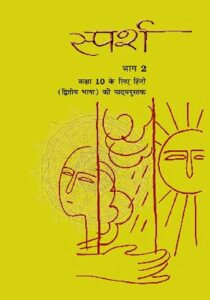
NCERT Class 10 Hindi Book PDF (Sparsh Part 2)
Contents
Chapter 1: Sakhi (Kabir)
Chapter 2: Pad (Meera)
Chapter 3: Manushyata (Maithilisharan Gupt)
Chapter 4: Parvat Pradesh Mein Pavas
Chapter 5: Top (Viren Dangwal)
Chapter 6: Kar Chale Hum Fida
Chapter 7: Aatmatran (Rabindranath Tagore)
Chapter 8: Bade Bhai Sahab
Chapter 9: Diary Ka Ek Panna
Chapter 10: Tatara Vamiro Katha
Mastering CBSE Class 10 Hindi Course B: Official NCERT Sparsh-2 (स्पर्श भाग 2) Guide
In the secondary school curriculum for CBSE Class 10 Hindi Course B (Subject Code 085), the prescribed main textbook Sparsh Part 2 (स्पर्श भाग – 2) provides an expansive literary canvas designed to foster communicative competence, cultural empathy, ethical consciousness, and aesthetic refinement. Published by the National Council of Educational Research and Training (NCERT), the textbook brings together an illustrious collection of classical saints (Kabir, Meera), national bards (Maithilisharan Gupt), nature romantics (Sumitranandan Pant), revolutionary progressive poets (Viren Dangwal, Kaifi Azmi, Rabindranath Tagore), and master prose stylists (Munshi Premchand, Sitaram Seksaria, Leeladhar Mandloi, Prahlad Agarwal, Nida Fazli, Ravindra Kelekar, and Habib Tanvir).
In the CBSE Class 10 Board Examination, the theoretical paper carries 80 marks, with Sparsh Part 2 contributing the largest portion—approximately 28 to 30 marks across Section A (objective extract-based MCQs) and Section B (descriptive short and long-answer questions). Scoring distinction (95%+) in Hindi Course B requires students to demonstrate sharp conceptual comprehension of Sant-Sahitya dialects (Sadhu-kkadi and Rajasthani-mixed Braj), subtle philosophical metaphors, socio-historical contexts, and impeccable grammatical presentation.
CBSE Class 10 Hindi Sparsh-2: Complete Rationalised Syllabus Blueprint
Under the latest rationalised curriculum published by NCERT, discontinued chapters (Bihari ke Dohe, Mahadevi Verma’s Madhur-Madhur Mere Deepak Jal, and Anton Chekhov’s Girgit) have been permanently deleted, leaving fourteen active chapters categorized into Poetry (पद्य खंड) and Prose (गद्य खंड):
| अध्याय सं. (Chapter) | पाठ का नाम (Title) | कवि / लेखक (Author) | विधा एवं केंद्रीय भाव (Genre & Thematic Focus) |
|---|---|---|---|
| पाठ 1 (Chapter 1) | साखी (Sakhi) | कबीर (Kabir) | सधुक्कड़ी दोहे: Sweet speech, ego dissolution, omnipresence of divine love, and spiritual awakening |
| पाठ 2 (Chapter 2) | पद (Meera ke Pad) | मीराबाई (Meera Bai) | भक्ति पद: Unconditional surrender to Giridhar Gopal; pleading for divine protection like Draupadi and Gajraj |
| पाठ 3 (Chapter 3) | मनुष्यता (Manushyata) | मैथिलीशरण गुप्त | राष्ट्रकवि उद्बोधन: True humanity living for others; supreme sacrifices of Dadhichi, Rantidev, and Karna |
| पाठ 4 (Chapter 4) | पर्वत प्रदेश में पावस | सुमित्रानंदन पंत | प्रकृति-चित्रण: Monsoon in the Himalayas; eye-flowers of mountains, misty clouds, and rushing waterfalls |
| पाठ 5 (Chapter 5) | तोप (Top) | वीरेन डंगवाल | समकालीन कविता: 1857 British colonial cannon; historical warning that tyrannical weapons become bird perches |
| पाठ 6 (Chapter 6) | कर चले हम फ़िदा | कैफ़ी आज़मी | देशभक्ति गीत (1962 Indo-China War): Supreme sacrifice of soldiers at borders; handing nation’s defense to youth |
| पाठ 7 (Chapter 7) | आत्मत्राण (Aatmatran) | रवींद्रनाथ ठाकुर | प्रार्थना गीत: Pleading not for divine rescue from hardship, but for inner strength and courage to overcome adversity |
| पाठ 8 (Chapter 8) | बड़े भाई साहब | प्रेमचंद (Premchand) | मनोवैज्ञानिक कहानी: Rote learning vs experiential wisdom; sibling psychology and elder brotherly responsibility |
| पाठ 9 (Chapter 9) | डायरी का एक पन्ना | सीताराम सेकसरिया | ऐतिहासिक संस्मरण: 26 January 1931 Kolkata Independence Day celebration, police brutality, and mass defiance |
| पाठ 10 (Chapter 10) | तताँरा वामीरो कथा | लीलाधर मंडलोई | अंडमान-निकोबार लोककथा: Sacrificial love ending rigid tribal isolation; split of Car Nicobar and Little Andaman |
| पाठ 11 (Chapter 11) | तीसरी कसम के शिल्पकार शैलेंद्र | प्रह्लाद अग्रवाल | सिनेमाई संस्मरण: Lyricist Shailendra’s tragic artistic idealism; uncompromised cinematic beauty of ‘Teesri Kasam’ |
| पाठ 12 (Chapter 12) | अब कहाँ दूसरे के दुःख से दुखी होने वाले | निदा फ़ाज़ली | पर्यावरण एवं मानवीय संवेदनशीलता: Eviction of birds and nature for concrete urbanization; Prophet Solomon and Sheikh Ayaz |
| पाठ 13 (Chapter 13) | पतझर में टूटी पत्तियाँ (गिन्नी का सोना / झेन की देन) | रवीन्द्र केलेकर | वैचारिक निबंध: Pure idealism vs practical opportunism; Japanese Zen tea ceremony (चायनोयु) attaining mindfulness in the present |
| पाठ 14 (Chapter 14) | कारतूस (Kartoos) | हबीब तनवीर | एकांकी नाटक: Daring guerrilla exploits of Nawab Wazir Ali of Awadh against British East India Company colonial officers |
CBSE Class 10 Hindi Course B: Examination Blueprint & Answer Writing Strategy
To secure maximum marks in Section A and Section B questions derived from Sparsh Part 2, candidates should implement the following strategic exam techniques:
- काव्य-सौंदर्य एवं शिल्प विधान: In classical poetry (Kabir, Meera), highlight the dialectical nuances—Braj, Rajasthani, and Khadiboli mixture. In modern verse, identify figures of speech (मानवीकरण, रूपक, अनुप्रास, अतिशयोक्ति) and sensory imagery.
- गद्य में सूक्ष्म व्यंग्य एवं जीवन-मूल्य: For stories like Bade Bhai Sahab and Patjhar Mein Tooti Pattiyan, focus on the psychological core. Avoid simply narrating the events; clearly define the conflict between rote educational pressures versus emotional maturity, or pure gold idealism versus copper pragmatism.
- CBSE Word-Count and Presentation Discipline: Keep 2-mark answers concise within 25-30 words, and 4-mark answers within 50-60 words. Structure answers with clear introductory thesis lines, supporting textual citations, and high-impact conclusions.
Frequently Asked Questions (FAQs) – NCERT Class 10 Hindi Sparsh-2
Q1. Which chapters were permanently deleted from Sparsh-2 under NCERT rationalisation?
Chapters by Bihari (दोहे), Mahadevi Verma (मधुर-मधुर मेरे दीपक जल), and Anton Chekhov (गिरगिट) have been permanently deleted and are not examined in CBSE board papers.
Q2. What is the total weightage of Sparsh Part 2 in Class 10 Hindi Course B?
Sparsh Part 2 contributes approximately 28 to 30 marks out of the 80-mark theoretical paper, examined through objective extract questions and descriptive analytical questions.
Q3. Where can I download verified chapter PDFs for Sparsh Part 2?
All official NCERT chapter PDFs and the complete book ZIP archive are mirrored on Cloudflare R2 CDN and freely downloadable through the direct verified links provided on this page.
Classes & Batches

Class 10 English Board Express: First Flight Prose, Poetry Analysis & Core Grammar Rules | Dear Sir

Class 10 Maths Full Syllabus NCERT Masterclass: Chapter-Wise Concepts, Proofs & Shortcut Tricks | Dear Sir

Class 10 SST Complete NCERT Board Course: Animated History, Civics, Geography & Economics | Digraj Sir

Class 10 Science Full Syllabus Batch 2026-27: Complete NCERT Lectures, Concept Notes & PYQs | PW Foundation
Study Resources & Notes

CBSE Class 10 Hindi PYQs with Solution
CBSE Class 10 Hindi Course A Sample Paper with Solution & Marking Scheme
Class 10 Hindi Kshitij NCERT Solutions PDF – Chapter Wise
Class 10 Hindi Kritika NCERT Solutions PDF – Chapter Wise
Quick Practice & Sets

CBSE Class 10 Science 30-Minute Rapid Chapter Mocks

CBSE Class 10 Science Chapter-wise Assertion & Reason Bank

CBSE Class 10 Maths Standard Timed Chapter Mocks

CBSE Class 10 Maths Standard NCERT Exemplar HOTS
Community Buzz

How to Prepare for Class 10 Maths in 30 Days Without Stress
Class 10 Economics: What Per Capita Income Hides
Class 10 English Literature: Build an Evidence-Based Answer
Class 10 Refractive Index: Connect Speed and Bending of Light
Comments (0)
No comments yet. Be the first to comment!
Please log in to comment
Log In