
NCERT Class 10 English Book PDF (Footprints Without Feet)
Contents
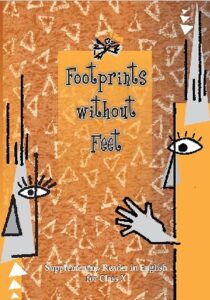
Chapter 1: A Triumph of Surgery
Chapter 2: The Thief's Story
Chapter 3: The Midnight Visitor
Chapter 4: A Question of Trust
Chapter 5: Footprints without Feet
Chapter 6: The Making of a Scientist
Chapter 7: The Necklace
Chapter 8: Bholi
Chapter 9: The Book That Saved the Earth
Mastering CBSE Class 10 English: Official NCERT Footprints Without Feet Supplementary Reader Guide
In the secondary school curriculum for CBSE Class 10 English Language and Literature (Subject Code 184), the supplementary reader Footprints Without Feet serves as a vital pedagogical vehicle for developing narrative appreciation, psychological empathy, moral discernment, and advanced reading fluency. Designed by the National Council of Educational Research and Training (NCERT), this literary collection spans a rich spectrum of genres—from heartwarming veterinary humor and coming-of-age redemption arcs to gripping espionage thrillers, science fiction parodies, and poignant social critiques of vanity and rural patriarchal oppression.
Within the 80-mark theoretical CBSE Class 10 English Board Examination, Section C (Literature and Supplementary Reading Text) dedicates substantial weightage to Footprints Without Feet. Typically, the supplementary reader contributes between 12 to 14 marks directly to the literature paper through a combination of:
- One compulsory 5-mark reference-to-context prose extract inquiry (testing vocabulary, subtle character deductions, and contextual authorial irony).
- One 3-mark analytical short-answer question (evaluating character motivation or moral dilemmas within 40-50 words).
- One high-weightage 6-mark evaluative long-answer question (requiring comprehensive thematic analysis, character contrast, or creative extrapolations such as speeches or diary entries within 100-120 words).
CBSE Class 10 Footprints Without Feet: Complete Chapter Breakdown
The latest rationalised NCERT syllabus for Footprints Without Feet comprises nine captivating short stories and dramatic plays, each authored by celebrated masters of world and Indian literature:
| Chapter No. | Story Title & Author | Genre & Protagonists | Core Thematic Focus |
|---|---|---|---|
| Chapter 1 | A Triumph of Surgery (James Herriot) | Veterinary memoir; Tricki & Mrs. Pumphrey | Dangers of over-indulgent affection, importance of physical discipline, and common-sense healing |
| Chapter 2 | The Thief’s Story (Ruskin Bond) | Psychological fiction; Hari Singh & Anil | Transformative power of unconditional trust, education as an antidote to crime, and moral redemption |
| Chapter 3 | The Midnight Visitor (Robert Arthur) | Espionage thriller; Ausable, Fowler & Max | Mental presence and wit triumphing over physical intimidation; subverting romantic spy clichés |
| Chapter 4 | A Question of Trust (Victor Canning) | Heist mystery; Horace Danby & The Lady in Red | Honor among thieves, deceptive appearances, and poetic justice overtaking calculated crime |
| Chapter 5 | Footprints without Feet (H.G. Wells) | Science fiction; Griffin the Invisible Man | Perils of scientific brilliance divorced from moral responsibility; anarchy and self-destruction |
| Chapter 6 | The Making of a Scientist (Robert W. Peterson) | Biographical sketch; Richard Ebright | Cultivating scientific curiosity, resilience through competitive defeat, and the ingredients of genius |
| Chapter 7 | The Necklace (Guy de Maupassant) | Realistic classic; Mathilde Loisel & M. Loisel | Destructive bourgeois vanity, the tragedy of living beyond one’s means, and shocking situational irony |
| Chapter 8 | Bholi (K.A. Abbas) | Social realism; Bholi (Sulekha) & Her Teacher | Empowerment through female education, dismantling dowry greed, and asserting self-respect against patriarchy |
| Chapter 9 | The Book That Saved the Earth (Claire Boiko) | Satirical sci-fi play; Think-Tank & Noodle | Humorous critique of megalomania, cultural misinterpretations, and Mother Goose rhymes saving humanity |
Key Pedagogical Insights & Board Preparation Strategies
To secure maximum marks in Section C questions derived from Footprints Without Feet, candidates should implement the following strategic exam techniques:
- Focus on Psychological Transformations: Supplementary stories emphasize internal change rather than mere plot progression. Track the moral awakening of Hari Singh as Anil teaches him to read, the metamorphosis of stammering Sulekha into the confident Bholi, and the tragic physical ruin of Mathilde Loisel across a decade of relentless debt.
- Analyze Irony and Plot Twists: Victor Canning’s A Question of Trust and Guy de Maupassant’s The Necklace culminate in devastating ironies. Be prepared to identify both situational and dramatic irony in 5-mark extract analyses.
- Master Character Contrasts: High-scoring 6-mark answers frequently pair contrasting figures: Ausable’s quick-witted calmness versus Max’s nervous reliance on a firearm; Anil’s casual generosity versus Hari Singh’s cynical street calculations; Think-Tank’s blustering pomposity versus Noodle’s tactful wisdom.
- Precision Vocabulary in Answers: Enhance your answer scripts with authoritative literary terms such as hubris, epiphany, situational irony, moral redemption, metamorphosis, bourgeois vanity, megalomania, and unconditional trust.
CBSE Answer Writing Formatting Guidelines for Supplementary Literature
To secure maximum marks in Section C, students should adopt a rigorous three-tiered answering framework:
- Opening Thesis Statement: Directly address the core prompt in the very first sentence, incorporating the title of the story, author, and central literary theme.
- Substantiated Textual Evidence: Elaborate the middle body paragraph using specific incidents, quotes, and precise character actions rather than vague generalities.
- Philosophical Conclusion: Conclude by linking the character’s journey to broader universal human truths, demonstrating higher-order cognitive reflection (HOTS).
Frequently Asked Questions (FAQs) – NCERT Class 10 English Footprints Without Feet
Q1. How many marks are allocated to Footprints Without Feet in the board exam?
Footprints Without Feet contributes approximately 12 to 14 marks in Section C, tested through an extract question (5 marks), a short answer question (3 marks), and an evaluative long answer question (6 marks).
Q2. Which stories are most important for 6-mark character questions?
‘Bholi’, ‘The Necklace’, ‘The Thief’s Story’, and ‘A Triumph of Surgery’ have historically shown the highest frequency for 6-mark character analysis and moral dilemma essays.
Q3. Where can I find the official rationalised NCERT PDF downloads?
Direct, verified PDF downloads for the complete Footprints Without Feet book and each individual chapter are available above via Cloudflare R2 CDN links, 100% compliant with the latest CBSE syllabus.
Classes & Batches

Class 10 English Board Express: First Flight Prose, Poetry Analysis & Core Grammar Rules | Dear Sir

Class 10 Maths Full Syllabus NCERT Masterclass: Chapter-Wise Concepts, Proofs & Shortcut Tricks | Dear Sir

Class 10 SST Complete NCERT Board Course: Animated History, Civics, Geography & Economics | Digraj Sir

Class 10 Science Full Syllabus Batch 2026-27: Complete NCERT Lectures, Concept Notes & PYQs | PW Foundation
Study Resources & Notes

Class 10 English Language & Literature Cheat Sheet PDF

Class 10 English First Flight NCERT Solutions PDF – Chapter Wise
Class 10 English Flashcards | Chapter Wise
CBSE Class 10 English Language & Literature Sample Paper with Solution & Marking Scheme
Quick Practice & Sets
CBSE Class 10 English Language & Literature PYQs

CBSE Class 10 Science 30-Minute Rapid Chapter Mocks

CBSE Class 10 Science Chapter-wise Assertion & Reason Bank

CBSE Class 10 Maths Standard Timed Chapter Mocks
Community Buzz

How to Prepare for Class 10 Maths in 30 Days Without Stress
Class 10 Economics: What Per Capita Income Hides
Class 10 English Literature: Build an Evidence-Based Answer
Class 10 Refractive Index: Connect Speed and Bending of Light
Comments (0)
No comments yet. Be the first to comment!
Please log in to comment
Log In