
Unable to load document pages inline.
Download PDF InsteadNCERT Class 10 English Footprints Without Feet Chapter 5: Footprints without Feet Guide
Chapter 5 of NCERT Class 10 English Footprints Without Feet presents an excerpted adventure from H.G. Wells’ seminal science fiction classic The Invisible Man, adapted as Footprints without Feet. Centered on the brilliant yet thoroughly unprincipled scientist Griffin, the narrative explores the immense ethical perils of scientific discovery unmoored from human empathy, civic morality, and legal responsibility.
In CBSE Board Examinations, this chapter is a frequent source of 5-mark extract questions, character analyses examining Griffin’s lawless nature, and 6-mark evaluative questions contrasting scientific brilliance with moral corruption.
1. Narrative Breakdown & Chronological Summary
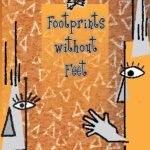
The story opens in London, where two young boys are astonished by an inexplicable sight on the muddy street: fresh, muddy impressions of bare human feet appearing out of thin air on steps, progressing down the street without any visible body creating them. The boys follow the fascinating footprints until the mud dries and the tracks vanish completely.
The unseen pedestrian is Griffin, a brilliant scientist who conducted exhaustive physiological experiments to discover rare chemical drugs capable of rendering the human body transparent. By swallowing these formulas, his body became as clear and transparent as a sheet of glass, retaining full physical solidity.
Unfortunately, Griffin’s intellectual genius is matched by a malicious, lawless temperament. When his landlord attempted to evict him, Griffin retaliated by setting fire to the landlord’s house. To escape detection, he shed his clothes, becoming invisible but finding himself homeless, penniless, and wandering the bitter January streets of London completely naked in freezing cold.
Desperate for warmth and shelter, Griffin slips into a large London department store just as closing time arrives. Once the staff departs, he enjoys a feast of stolen luxury: breaking open boxes of warm clothes, shoes, an overcoat, and a wide-brimmed hat. He feasts on cold meat and coffee in the restaurant and falls asleep on a pile of quilts. However, when store assistants arrive early the next morning, Griffin panics and is forced to strip off his newly acquired garments to escape invisible into the freezing air once more.
Determined to disguise himself and find a permanent solution, Griffin visits a theatrical shop in Drury Lane. There, he equips himself with bandages wrapped around his head, dark spectacles, a false nose, huge bushy side-whiskers, and a large hat. Before departing, he callously attacks the shopkeeper from behind and steals all his cash.
Eager to escape the crowded surveillance of London, Griffin boards a train to the remote village of Iping, booking two rooms at the local inn owned by Mrs. Hall. Arriving in mid-winter with a bandaged face and strange equipment, Griffin is an extraordinary curiosity. Mrs. Hall attempts to engage him in friendly conversation, but Griffin rebuffs her rudely, claiming he desires complete solitude for his scientific experiments and that his face was disfigured in an accident.
Soon, Griffin’s stolen cash runs out. Suspicious occurrences multiply: the local clergyman and his wife are awakened at dawn by chinking coins, witnessing their desk opened and housekeeping money stolen by an unseen presence. Simultaneously, Mr. and Mrs. Hall find Griffin’s room door open, with his clothes and bandages strewn across the chairs. When Mrs. Hall investigates, the furniture suddenly springs to life: the bedroom chair rises into the air, charges at her, and shoves the terrified couple out of the room, locking the door behind them. Convinced that the stranger has bewitched her furniture with spirits, Mrs. Hall confronts Griffin.
Furious at being questioned, Griffin loses all control: “You don’t understand who or what I am? I’ll show you!” In a flash, he rips off his bandages, whiskers, spectacles, and nose, transforming into a horrifying headless torso before the screaming villagers. When the local constable, Mr. Jaffers, arrives with a warrant, he is astounded to find he must arrest a man with no head. A chaotic brawl ensues as Griffin strips off his remaining clothes, becoming completely invisible. Delivering invisible blows that knock constable Jaffers unconscious, Griffin escapes into the countryside, a lawless phantom at large.
2. Thematic Analysis & Ethical Critique
- The Misuse of Science: Wells presents a prophetic warning regarding scientific advancement devoid of ethical conscience. Griffin uses one of the greatest scientific discoveries in human history not to heal disease or elevate civilization, but to enact petty revenge, commit theft, assault innocent citizens, and pursue megalomaniacal anarchy.
- Isolation and Moral Decay: Physical invisibility alienates Griffin from the human social contract. Without the fear of social exposure or accountability, his moral compass completely disintegrates, proving that unchecked power breeds tyrannical depravity.
- Humor and Gothic Horror: The narrative masterfully balances comedy (the flying bedroom chair, the headless confrontation at the inn) with genuine gothic terror (the invisible assaults and cold-blooded arson).
3. High-Yield CBSE Board Examination Questions
- Extract-Based Inquiry (5 Marks): Analyzing the clergyman’s encounter with the invisible thief or interpreting Mrs. Hall’s terror at the animated furniture.
- Character Evaluation (6 Marks): ‘Griffin was an eccentric scientist, but not a true human being.’ Evaluate this statement, detailing his criminal exploits in London and Iping.
- Thematic Essay (6 Marks): How does H.G. Wells illustrate the dangers of scientific genius when disconnected from social responsibility and moral integrity?
4. Frequently Asked Questions (FAQs)
Q1. How did Griffin become invisible?
Through rigorous physiological research, Griffin discovered rare drug formulations that altered the refractive index of human cells, making them transparent as glass while retaining physical solidity.
Q2. Why did Griffin set fire to his landlord’s house?
His landlord disliked him and attempted to evict him from the premises. In vindictive revenge, Griffin set fire to the house before swallowing his drugs to escape undetected.
Q3. What curious incident took place in the clergyman’s study?
The clergyman and his wife heard the clink of coins and the rustle of papers in the study early in the morning. When they entered with a poker, the room appeared completely empty, yet their housekeeping money had vanished from the opened desk.
Classes & Batches

Class 10 English Board Express: First Flight Prose, Poetry Analysis & Core Grammar Rules | Dear Sir

Class 10 Maths Full Syllabus NCERT Masterclass: Chapter-Wise Concepts, Proofs & Shortcut Tricks | Dear Sir

Class 10 SST Complete NCERT Board Course: Animated History, Civics, Geography & Economics | Digraj Sir

Class 10 Science Full Syllabus Batch 2026-27: Complete NCERT Lectures, Concept Notes & PYQs | PW Foundation
Study Resources & Notes

Class 10 English Language & Literature Cheat Sheet PDF

Class 10 English First Flight NCERT Solutions PDF – Chapter Wise
Class 10 English Flashcards | Chapter Wise

CBSE Class 10 English Language & Literature Sample Paper with Solution & Marking Scheme
Quick Practice & Sets
CBSE Class 10 English Language & Literature PYQs

CBSE Class 10 Science 30-Minute Rapid Chapter Mocks

CBSE Class 10 Science Chapter-wise Assertion & Reason Bank

CBSE Class 10 Maths Standard Timed Chapter Mocks
Community Buzz

How to Prepare for Class 10 Maths in 30 Days Without Stress
Class 10 Economics: What Per Capita Income Hides
Class 10 English Literature: Build an Evidence-Based Answer
Class 10 Refractive Index: Connect Speed and Bending of Light
Comments (0)
No comments yet. Be the first to comment!
Please log in to comment
Log In