Class 10 Hindi Kritika NCERT Solutions PDF – Chapter Wise
Contents
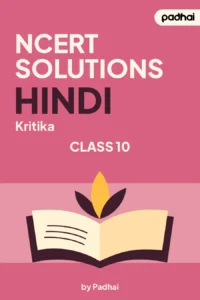
Class 10 Hindi Kritika NCERT Solutions PDF – Chapter Wise
Master CBSE Class 10 Hindi Kritika (कृतिका भाग 2) with comprehensive chapter-wise NCERT Solutions. Each chapter includes thorough analytical explanations, high-order thinking question answers (HOTS), and authentic CBSE examination formats for Mata Ka Aanchal, Sana Sana Hath Jodi, and Main Kyon Likhta Hoon.
Mastering CBSE Class 10 Hindi Course A: Official NCERT Kritika-2 (कृतिका भाग 2) Guide
In the secondary curriculum of CBSE Class 10 Hindi Course A (Subject Code 002), the supplementary reader Kritika Part 2 (कृतिका भाग – 2) serves as a vital literary medium designed to cultivate emotional sensitivity, cultural awareness, social empathy, and analytical reflection. Published by the National Council of Educational Research and Training (NCERT), this textbook features evocative memoirs, immersive travelogues, and philosophical autobiographical essays authored by master craftsmen of modern Hindi prose, including Shivpujan Sahay, Madhu Kankariya, and Sachchidananda Hirananda Vatsyayan ‘Agyeya’.
In the CBSE Class 10 Board Examination, the theoretical paper carries 80 marks, divided systematically into reading comprehension, grammar, literature, and creative writing. Kritika Part 2 is tested directly in Section C (वर्णनात्मक प्रश्न), contributing 8 marks through two analytical long-answer questions (4 marks each; 50-60 words limit). These questions test high-order thinking skills (HOTS), demanding students to look beyond superficial plot outlines and critically evaluate rural filial bonds, indigenous environmental preservation, and the ethical responsibilities of creative expression.
CBSE Class 10 Hindi Course A Kritika-2: Rationalised Syllabus Blueprint
Under the latest rationalised curriculum published by NCERT, older chapters (such as George Pancham Ki Naak and Ehi Thaiyan Jhulni Herani Ho Rama) have been completely removed, leaving three core masterpieces for board examination evaluation:
| अध्याय सं. (Chapter) | पाठ का नाम (Title) | लेखक (Author) | विधा एवं मुख्य विषय (Genre & Thematic Focus) |
|---|---|---|---|
| पाठ 1 (Chapter 1) | माता का अँचल (Mata Ka Aanchal) | शिवपूजन सहाय (Shivpujan Sahay) | आंचलिक संस्मरण (Rural Memoir): Maternal sanctuary, rural childhood games, and father-son intimacy |
| पाठ 2 (Chapter 2) | साना-साना हाथ जोड़ि… (Sana-Sana Hath Jodi) | मधु कांकरिया (Madhu Kankariya) | यात्रा-वृत्तांत (Himalayan Travelogue): Sikkim biodiversity, labor of mountain women, and ecological preservation |
| पाठ 3 (Chapter 3) | मैं क्यों लिखता हूँ? (Main Kyon Likhta Hoon?) | स. ही. वा. ‘अज्ञेय’ (Agyeya) | विचारात्मक निबंध (Reflective Essay): Internal impulse for writing, Hiroshima atomic tragedy, and authorial catharsis |
Strategic Board Examination Blueprint & Answer Writing Guidelines
To secure maximum marks in Section C questions based on Kritika Part 2, students should follow a structured answering methodology:
- Focus on Regional and Emotional Context: When writing answers on Mata Ka Aanchal, emphasize the contrast between the playful paternal companionship of father-son daily routines and the ultimate psychological refuge provided exclusively by the mother’s lap during mortal terror.
- Highlight Ecological and Socio-Economic Contrasts: In Sana-Sana Hath Jodi, highlight the stark contrast between the sublime natural beauty of the snow-clad Himalayas and the grueling, hazardous labor of indigenous women breaking stones with hammers while cradling infants in back baskets (doko).
- Internal Compulsion vs. External Pressure: For Agyeya’s Main Kyon Likhta Hoon, clearly distinguish between external catalysts (financial need, editorial deadlines, publisher demands, critical praise) and the paramount internal creative impulse (अंतरिक विवशता) that compels an artist to achieve psychological liberation.
- Adhere to CBSE Word-Count Constraints: Responses must remain tightly focused within 50-60 words per question. Avoid reciting lengthy narrative backstories; instead, present concise, analytical arguments directly answering the question prompt.
CBSE Class 10 Hindi Course A Kritika-2: Detailed Marking Scheme & Question Rubrics
According to the official CBSE Examination Guidelines for Hindi Course A, descriptive questions from Kritika Part 2 are evaluated based on a strict multi-dimensional assessment matrix:
- विषय-वस्तु (Content & Conceptual Accuracy – 2 Marks): The answer must directly address the analytical core of the prompt using precise textual references, identifying underlying psychological motivations, regional nuances, or historical context.
- प्रस्तुति एवं संगठन (Presentation & Coherence – 1 Mark): The response should follow a clear, logical structure without wandering off-topic. A strong opening sentence must be backed by coherent reasoning and a reflective conclusion.
- भाषा एवं वर्तनी शुद्धता (Linguistic & Grammatical Precision – 1 Mark): Marks are strictly protected through correct Devanagari spelling (वर्तनी), appropriate punctuation (विराम-चिह्न), and authoritative literary vocabulary.
Comprehensive Chapter-wise Pedagogical Insights for 95%+ in Kritika-2
To master Kritika Part 2, candidates should focus on three overarching thematic axes:
- आंचलिक जीवन एवं वात्सल्य रस (‘माता का अँचल’): Understand the social ecosystem of the 1920s rural Indian village. Examine how the author uses folk terms (भभूत, गोरस, त्रिपुंड, चिरैया, कड़वा तेल) to depict an organic, nature-integrated childhood where the father is a playmate, but the mother is the ultimate sanctuary from primal dread.
- प्रकृति-संरक्षण एवं सर्वहारा श्रम (‘साना-साना हाथ जोड़ि…’): Analyze the delicate duality between aesthetic sublime beauty and human survival. Track Madhu Kankariya’s realization that the Himalayan snow peaks are the planet’s water reservoirs (जल-स्तंभ), while the indigenous women breaking stones on mountain cliffs represent the invisible, sweat-stained foundations of national infrastructure.
- रचनात्मक अंतःप्रेरणा एवं वैज्ञानिक नैतिकता (‘मैं क्यों लिखता हूँ?’): Grasp Agyeya’s philosophical distinction between mechanical external pressures (money, editorial deadlines, fame) and organic internal compulsion (आंतरिक विवशता). Connect his reaction to the charred human shadow on a Hiroshima stone to the ethical responsibility of artists to voice universal human anguish.
Frequently Asked Questions (FAQs) – NCERT Class 10 Hindi Kritika-2
Q1. Are dropped chapters like ‘George Pancham Ki Naak’ tested in 2026-27 CBSE exams?
No. Under the rationalised NCERT syllabus, ‘George Pancham Ki Naak’ and ‘Ehi Thaiyan Jhulni Herani Ho Rama’ have been permanently deleted and are not examined in board papers.
Q2. What is the total mark distribution for Kritika Part 2 in Class 10 Hindi Course A?
Kritika Part 2 carries 8 marks in the descriptive section of the question paper, evaluated through two short/medium answer questions carrying 4 marks each.
Q3. Where can I download verified chapter PDFs for Kritika Part 2?
All official NCERT chapter PDFs and the complete book ZIP archive are mirrored on Cloudflare R2 CDN and freely downloadable through the direct verified links provided on this page.
Classes & Batches

Class 10 English Board Express: First Flight Prose, Poetry Analysis & Core Grammar Rules | Dear Sir

Class 10 Maths Full Syllabus NCERT Masterclass: Chapter-Wise Concepts, Proofs & Shortcut Tricks | Dear Sir

Class 10 SST Complete NCERT Board Course: Animated History, Civics, Geography & Economics | Digraj Sir

Class 10 Science Full Syllabus Batch 2026-27: Complete NCERT Lectures, Concept Notes & PYQs | PW Foundation
Study Resources & Notes



Quick Practice & Sets

CBSE Class 10 Science 30-Minute Rapid Chapter Mocks

CBSE Class 10 Science Chapter-wise Assertion & Reason Bank

CBSE Class 10 Maths Standard Timed Chapter Mocks