
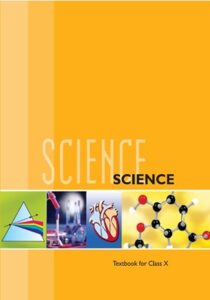
NCERT Class 10 Science Book PDF
Contents
Chapter 1: Chemical Reactions and Equations
Chapter 2: Acids, Bases and Salts
Chapter 3: Metals and Non-metals
Chapter 4: Carbon and its Compounds
Chapter 5: Life Processes
Chapter 6: Control and Coordination
Chapter 7: How do Organisms Reproduce?
Chapter 8: Heredity
Chapter 9: Light – Reflection and Refraction
Chapter 10: The Human Eye and the Colourful World
Mastering CBSE Class 10 Science: Complete Official NCERT Textbook Guide (2026-27 Edition)
Class 10 Science is one of the foundational academic pillars in secondary education. Whether your future aspirations point toward Medicine (NEET), Engineering (JEE), Biotechnology, Pure Sciences, or competitive exams, your journey begins with the concepts codified in the official NCERT Class 10 Science Textbook. Unlike rote-learning-heavy subjects, Science rewards conceptual clarity, mechanistic reasoning, precise terminology, and accurate diagrammatic representations.
Every single question presented on the CBSE Class 10 Science Board Examination—from the 20 opening multiple-choice questions (MCQs) and assertion-reasoning items to high-order 5-mark subjective answers and competency-based case studies—originates directly from NCERT line-by-line theories, textbook activities, and in-text tables. This comprehensive guide provides chapter-wise digital PDFs for the latest rationalised 2026–27 edition, accompanied by an extensive syllabus blueprint, unit-wise weightage analysis, practical laboratory expectations, and proven examination strategies designed to secure a top score.
CBSE Class 10 Science: Official Unit-Wise Marks Distribution (2026-27)
The CBSE theoretical examination for Class 10 Science carries a total of 80 marks (with the remaining 20 marks evaluated through internal assessments, portfolio records, and practical laboratory tests). The rationalised 13 chapters are organized into five core thematic units as detailed below:
| Unit No. | Unit Title & Theme | Chapters Covered | Board Marks Weightage |
|---|---|---|---|
| Unit I | Chemical Substances – Nature and Behaviour | Chapter 1, 2, 3, and 4 | 25 Marks |
| Unit II | World of Living (Biological Sciences) | Chapter 5, 6, 7, and 8 | 25 Marks |
| Unit III | Natural Phenomena (Optics & Vision) | Chapter 9 and 10 | 12 Marks |
| Unit IV | Effects of Current (Electricity & Magnetism) | Chapter 11 and 12 | 13 Marks |
| Unit V | Natural Resources (Environmental Ecology) | Chapter 13 | 05 Marks |
| Total Written Theory Paper: | 80 Marks | ||
| Internal Assessment (Practicals, Projects, Portfolios): | 20 Marks | ||
| Grand Aggregate Total: | 100 Marks | ||
CBSE Board Question Paper Blueprint & Cognitive Weightage
To prepare effectively, you must understand the distribution of questions across cognitive difficulty levels mandated by the CBSE Curriculum Committee:
- Section A (20 Marks): 20 Objective Type Questions (1 mark each). This includes 16 standalone Multiple Choice Questions (MCQs) and 4 Assertion-Reasoning questions testing rapid recall, definitions, and immediate conceptual deductions.
- Section B (12 Marks): 6 Short Answer Questions (2 marks each). These require concise explanations, brief chemical equations, or direct conceptual justifications written within 30 to 50 words.
- Section C (21 Marks): 7 Short Answer Type-II Questions (3 marks each). Designed to test deeper comprehension, these questions feature multi-part problem solving, physiological mechanisms, or ray diagrams requiring precise labelling (50 to 80 words).
- Section D (15 Marks): 3 Long Answer Questions (5 marks each). One question each is typically drawn from Chemistry, Biology, and Physics. They consist of structured multi-tier sub-questions evaluating comprehensive understanding, experimental justifications, and mathematical derivations.
- Section E (12 Marks): 3 Case-Based / Data-Based Integrated Assessment Units (4 marks each). These present real-world scenarios, experimental activity setups, or graphical data with associated analytical questions assessing competency and application.
Why the Rationalised NCERT Edition is Indispensable for 2026-27
Under the National Education Policy (NEP) guidelines, the National Council of Educational Research and Training (NCERT) streamlined the Class 10 Science curriculum. Outdated and non-essential chapters—such as Periodic Classification of Elements, Sources of Energy, and Management of Natural Resources—have been formally decommissioned from the core board examination syllabus. The current rationalised curriculum concentrates on high-yield conceptual depth across 13 coherent chapters.
Studying directly from this rationalised edition protects students from dedicating valuable revision hours to omitted topics while ensuring 100% syllabus coverage. Furthermore, CBSE strictly benchmarks its official answer keys against NCERT terminology. Using non-standard terminology or obsolete mechanisms frequently leads to mark deductions during centralized board evaluation.
Proven Subject-Specific Study Strategies for Class 10 Science
- Chemistry (Chapters 1 to 4): Chemical Equations with Physical States
Never write unbalanced word equations. Always write balanced molecular equations and include physical states (solid (s), liquid (l), gas (g), aqueous (aq)) and reaction conditions (catalysts, temperature, pressure). In qualitative analysis, explicitly state observation changes such as precipitate colour (e.g., white precipitate of barium sulphate or yellow lead iodide) and effervescence of gas. - Biology (Chapters 5 to 8): Accurate Diagrams and Flowcharts
Neat, well-proportioned diagrams with clean horizontal labelling are mandatory in Section C and D questions. Practice drawing the human alimentary canal, nephron structure, heart circulation, reflex arc, human female reproductive system, and Mendel’s monohybrid/dihybrid crosses. In long answers, presenting physiological pathways as sequential numbered stages ensures maximum step marks. - Physics (Chapters 9 to 12): Sign Conventions and SI Units
Physics questions test mathematical precision and physical intuition. Master the New Cartesian Sign Convention for spherical mirrors and lenses. Never forget to append correct SI units (e.g., Amperes, Volts, Watts, Joules, Dioptres) to your final calculated numerical values. Every ray diagram must feature prominent directional arrows indicating the direction of light propagation. - Environmental Science (Chapter 13): 10% Energy Flow and Biomagnification
Master ecological concepts like Lindeman’s 10% law of energy transfer across trophic levels, biological magnification of non-biodegradable pesticides, and the photochemical mechanism of ozone depletion. Use precise scientific phrasing rather than conversational descriptions.
Laboratory Activities & Experimental Questions
Over 15% to 20% of board questions are directly linked to textbook laboratory activities. Examiners regularly formulate Section A MCQs and Section E case studies based on:
- The burning of magnesium ribbon in air and the basic nature of its ash.
- Testing for carbon dioxide gas by passing it through freshly prepared lime water.
- Decomposition of ferrous sulphate crystals accompanied by the characteristic smell of burning sulphur.
- Action of saliva on starch solution tested with dilute iodine solution.
- Verification of Ohm’s law by plotting a current versus potential difference (V-I) graph.
- Tracing the path of a ray of light through a rectangular glass slab and determining lateral displacement.
Scroll down to explore the complete chapter-wise digital modules. You can read each chapter online or download the clean official PDFs for comprehensive offline preparation.
Classes & Batches

Class 10 Science Full Syllabus Batch 2026-27: Complete NCERT Lectures, Concept Notes & PYQs | PW Foundation

Class 10 English Board Express: First Flight Prose, Poetry Analysis & Core Grammar Rules | Dear Sir

Class 10 Maths Full Syllabus NCERT Masterclass: Chapter-Wise Concepts, Proofs & Shortcut Tricks | Dear Sir

Class 10 SST Complete NCERT Board Course: Animated History, Civics, Geography & Economics | Digraj Sir
Study Resources & Notes


Quick Practice & Sets

CBSE Class 10 Science 30-Minute Rapid Chapter Mocks

CBSE Class 10 Science Chapter-wise Assertion & Reason Bank
CBSE Class 10 Science NCERT Exemplar Problems & Solutions

CBSE Class 10 Science Competency & Case Study Bank
Community Buzz

How to Prepare for Class 10 Maths in 30 Days Without Stress
Class 10 Economics: What Per Capita Income Hides
Class 10 English Literature: Build an Evidence-Based Answer
Class 10 Refractive Index: Connect Speed and Bending of Light
Comments (0)
No comments yet. Be the first to comment!
Please log in to comment
Log In